
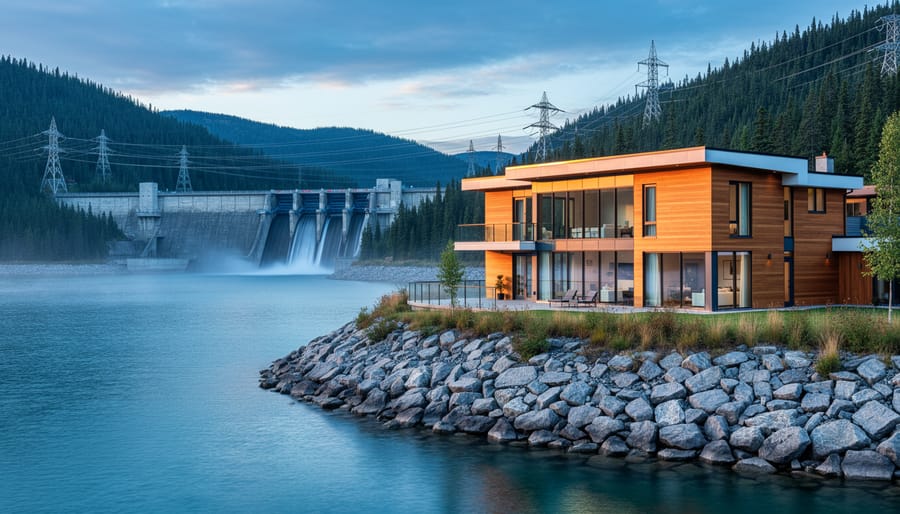
Evaluate the regulatory landscape before listing your property near Canadian hydropower infrastructure, as proximity to generating stations, transmission corridors, or reservoir flood zones may trigger specific disclosure requirements under provincial real estate law. Properties within designated setback distances of hydroelectric facilities often face unique valuation challenges similar to those homeowners encounter when they sell house as-is UK, where infrastructure proximity influences buyer perception and negotiating leverage. Document electromagnetic field measurements, noise assessments, and any utility easements affecting your land title, as these technical specifications directly impact market competitiveness and attract specialized buyers from the energy sector seeking investment opportunities near renewable infrastructure.
Assess hydropower-specific market dynamics by analyzing recent comparable sales within the watershed area, factoring in seasonal reservoir level fluctuations that may alter shoreline access or affect foundation stability disclosures. Canadian hydropower facilities generate substantial local employment, creating demand from energy professionals seeking proximity to operational sites, yet this advantage counterbalances concerns about industrial aesthetics and operational noise profiles. Understanding this dual nature positions you to target the right buyer segment while setting realistic price expectations.
Engage legal counsel experienced in energy sector transactions to navigate provincial legislation governing properties near critical infrastructure, particularly regarding future development restrictions or potential utility expansion rights. Many hydropower facilities operate under long-term licenses requiring periodic infrastructure upgrades, potentially affecting adjacent property use through construction access requirements or transmission line modifications.
Consider timing your sale relative to hydropower project cycles, as announced facility expansions or environmental upgrade initiatives may enhance property values through improved amenities or infrastructure modernization. The as-is selling strategy proves particularly effective near hydropower sites, allowing you to transfer properties without extensive environmental remediation while meeting the specific needs of industrial buyers or energy companies seeking land banking opportunities adjacent to operational assets.
The Hydropower-Property Value Connection in Canada
Environmental Impact Zones and Property Designation
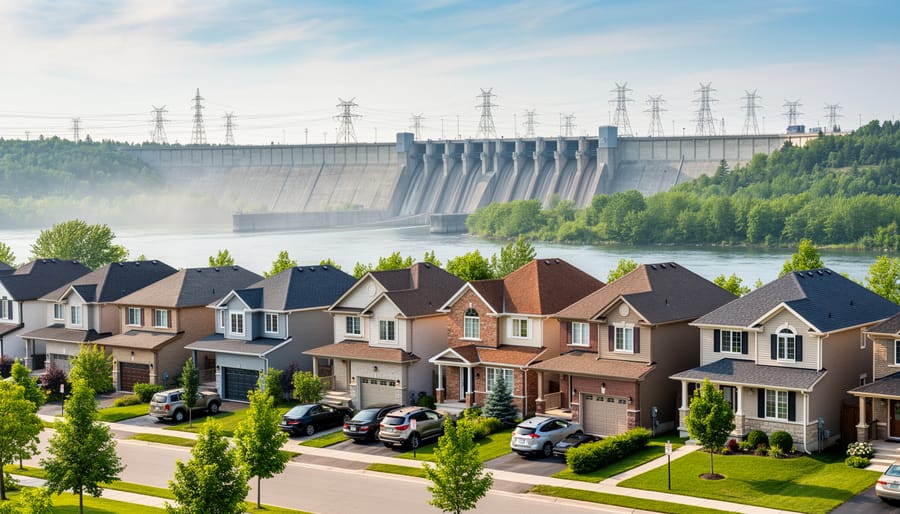
Properties situated near hydropower infrastructure occupy a distinct regulatory landscape where environmental protection mandates directly influence real estate classifications and market viability. Understanding these impact zones is essential for property owners considering as-is sales, particularly given the layered jurisdiction of federal, provincial, and local authorities governing Canadian hydropower operations.
Environmental buffer zones surrounding hydropower facilities typically extend 30 to 100 meters from reservoir shorelines and transmission corridors, though specific distances vary by provincial regulation and facility capacity. These zones impose land-use restrictions that may prohibit residential development, limit structural modifications, or require specialized environmental assessments before property transfers. Properties within designated watershed protection areas face additional constraints, as municipalities and utilities like BC Hydro dams maintain stringent oversight to prevent contamination risks and preserve water quality for generation operations.
Flood risk assessments constitute another critical designation factor, particularly for properties in reservoir influence zones or downstream areas. Hydropower operations involve controlled water level fluctuations that can reclassify flood plain boundaries, directly affecting insurance availability, mortgage eligibility, and ultimately property marketability. Recent regulatory updates have mandated more comprehensive flood mapping around major facilities, resulting in retroactive designation changes that catch existing homeowners unprepared.
These environmental designations create a tiered property market where parcels face varying degrees of marketability constraints. Properties with clean environmental assessments and minimal buffer zone overlap command premium values, while those bearing multiple designations often require as-is sale strategies due to compliance costs and buyer hesitation. International observers note that Canadian watershed protection standards rank among the most rigorous globally, creating unique market dynamics that warrant specialized valuation approaches and disclosure protocols during property transactions.
Regulatory Constraints on Property Modifications
Property modifications near Canadian hydropower infrastructure face extensive regulatory oversight from multiple governmental levels, creating significant constraints that frequently necessitate as-is sales strategies. Under the Canadian Navigable Waters Act and provincial water resource legislation, properties within designated hydropower zones are subject to stringent setback requirements and construction limitations. These regulations typically restrict alterations within 30 to 100 meters of water control structures, transmission corridors, and flood management zones, depending on provincial jurisdiction.
Federal oversight through Natural Resources Canada and Environment and Climate Change Canada imposes additional requirements for environmental impact assessments when property improvements could affect hydroelectric operations or aquatic ecosystems. Provincial authorities, including hydropower crown corporations such as Hydro-Québec, BC Hydro, and Ontario Power Generation, maintain proprietary easements that often prohibit or severely limit modifications including septic system upgrades, foundation work, and landscape alterations without extensive approval processes.
The permitting timelines for approved modifications can extend from six months to several years, involving multiple engineering assessments, environmental studies, and stakeholder consultations. Compliance costs typically range from $15,000 to over $100,000 for comprehensive environmental and geotechnical evaluations alone. These regulatory complexities disproportionately affect aging residential properties requiring modernization, where renovation costs become economically prohibitive when combined with compliance expenses.
Consequently, property owners increasingly opt for as-is sales, transferring regulatory burden and compliance responsibilities to specialized buyers equipped with expertise in navigating hydropower-adjacent development frameworks. This market adaptation reflects the practical reality that conventional buyers lack the technical resources and risk tolerance required for properties encumbered by hydropower-related regulatory constraints.
When Selling ‘As Is’ Becomes the Strategic Choice
Pre-Development and Expansion Scenarios
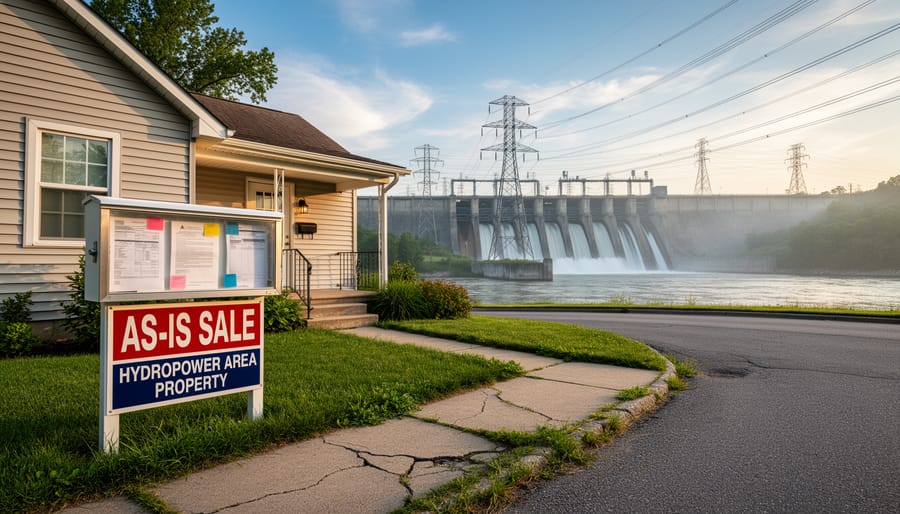
Property transactions near proposed or expanding hydropower facilities face distinct challenges stemming from regulatory uncertainty and market volatility during pre-development phases. When utilities announce plans for new installations or capacity upgrades, surrounding real estate markets often experience transitional periods where traditional valuation methods become unreliable. Homeowners considering sales during these phases may benefit from as-is transactions that acknowledge current uncertainty while avoiding prolonged market exposure.
Development timelines for different hydropower types vary significantly, with run-of-river projects typically advancing faster than reservoir-based facilities requiring extensive environmental assessments. This temporal variability creates windows where property values remain suppressed due to pending regulatory approvals, construction impacts, or anticipated land-use changes. Sellers who wait for market stabilization may face extended holding periods, particularly when environmental review processes encounter delays or legal challenges from stakeholder groups.
Modernization projects at existing facilities introduce additional complexity, as infrastructure upgrades may temporarily affect property access, aesthetics, or local amenities. Canadian utilities increasingly pursue turbine replacements and digital control system installations to enhance efficiency, activities that generate construction-related disturbances lasting months or years. Properties marketed as-is during these phases allow sellers to exit without guaranteeing post-construction conditions or assuming responsibility for unforeseen project scope changes.
International precedents from Norway and Switzerland demonstrate that properties sold during hydropower expansion phases often appreciate substantially once facilities become operational and contribute tax revenues to local municipalities. However, this eventual value recovery provides little immediate benefit to sellers requiring liquidity during development stages. As-is sales acknowledge this timing mismatch, transferring future upside potential to buyers willing to navigate uncertainty while providing sellers with present-day transaction certainty despite suboptimal market conditions.
Water Rights and Land Access Complications
Properties situated near Canadian hydropower infrastructure often carry complex water rights agreements and land access restrictions that fundamentally alter their investment calculus. These encumbrances, frequently established decades ago during facility construction, create legal and practical barriers that make traditional renovation-and-resale strategies economically unviable.
Water rights agreements tied to hydropower operations typically grant utilities perpetual easements for flood control, reservoir management, and infrastructure maintenance. These easements may restrict property modifications within designated setback zones, limit certain types of construction, or mandate access corridors that traverse private land. For property owners, this translates to renovation projects requiring additional regulatory approvals from multiple stakeholders—not only municipal authorities but also utility operators and provincial water resource agencies. The approval process can extend timelines by months and introduce uncertainty that deters capital investment.
Flowage rights present another complication. Properties located within historical flood zones or reservoir fluctuation areas may experience periodic inundation that varies with seasonal generation demands and precipitation patterns. This environmental variability makes certain improvements impractical or requires specialized engineering solutions that dramatically increase renovation costs. Foundation work, landscaping, and outbuilding construction all demand consideration of water level variations that standard residential contractors may lack expertise to address.
Access restrictions compound these challenges. Hydropower facilities often operate under strict security protocols, particularly following recent infrastructure protection initiatives discussed at international energy conferences. Properties requiring transit across utility-controlled land face potential access limitations during maintenance periods or emergency operations, creating liability concerns that complicate property valuations and financing.
These cumulative factors explain why as-is transactions dominate the market near hydropower sites. Buyers with specialized knowledge of energy sector operations—whether utility companies, renewable energy developers, or institutional investors—can properly assess these encumbrances and integrate properties into broader operational strategies. For individual sellers, avoiding renovation investments eliminates regulatory uncertainty while expediting transactions in this specialized market segment.
Market Dynamics for Properties Adjacent to Hydropower Infrastructure
Investor and Developer Interest Patterns
Properties situated near Canada’s hydropower infrastructure attract distinct categories of specialized buyers whose investment rationale extends beyond conventional residential considerations. Energy sector investors frequently target parcels adjacent to generating facilities for workforce housing, operational support facilities, or strategic land banking aligned with planned infrastructure expansions. These entities often maintain dedicated acquisition portfolios for properties within 5-kilometer radii of existing or proposed hydropower sites, particularly where grid connectivity and access roads already exist.
Conservation organizations represent another significant buyer segment, driven by watershed protection mandates and habitat preservation objectives. These groups prioritize properties offering ecological buffer zones around reservoir systems or along transmission corridors, with funding mechanisms tied to biodiversity conservation and water quality maintenance programs. Development companies specializing in renewable energy ancillary services also demonstrate sustained interest, converting hydropower-proximate properties into maintenance depots, equipment staging areas, or training facilities.
The as-is acquisition model proves particularly attractive to these specialized buyers, who typically possess technical expertise to independently assess structural conditions and environmental factors. Their due diligence processes emphasize geotechnical suitability, proximity to transmission infrastructure, and compatibility with existing land use designations rather than cosmetic property conditions. International investment entities, particularly those expanding renewable energy portfolios across North American markets, increasingly participate in these transactions, bringing cross-border capital flows and sophisticated valuation methodologies that account for long-term infrastructure adjacency premiums rather than immediate residential market comparables.
Pricing Considerations and Valuation Challenges
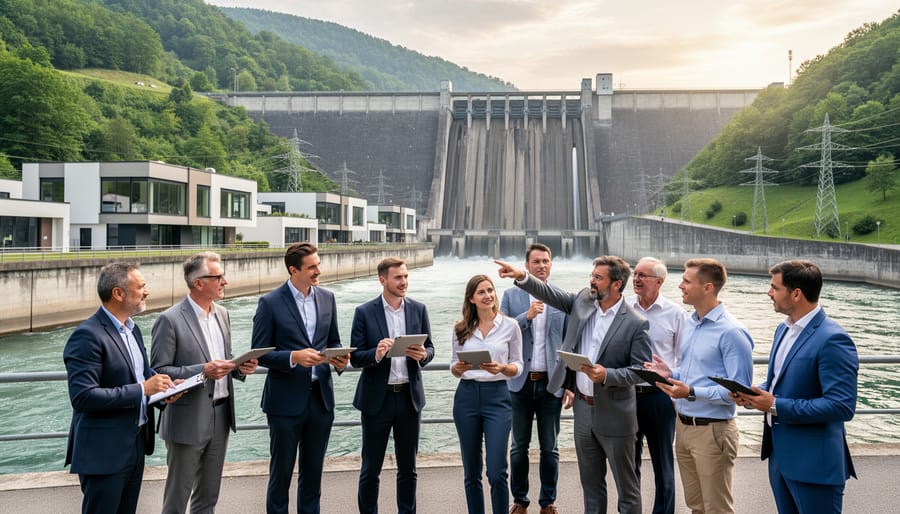
Property valuation near Canadian hydropower facilities requires specialized assessment methodologies that account for both infrastructure proximity benefits and potential market perception challenges. Appraisers typically employ modified comparable sales approaches, recognizing that standard residential valuation models may inadequately capture the unique characteristics of these locations.
Discount factors commonly arise from perceived environmental concerns, including electromagnetic field exposure from transmission infrastructure, visual impacts of power lines or substations, and noise from generating facilities. Properties within 500 meters of major hydropower installations may experience valuation reductions ranging from 5 to 15 percent, though empirical data varies significantly across Canadian jurisdictions. Market studies from Quebec and British Columbia indicate that buyer perception rather than measurable environmental impact often drives these discounts.
Conversely, premium opportunities exist for properties benefiting from hydropower-adjacent amenities. Reservoir-adjacent locations offering recreational access, stable employment proximity for energy sector professionals, and enhanced infrastructure reliability can command valuation premiums of 8 to 12 percent. Properties with secured utility easement agreements providing ongoing revenue streams present additional valuation complexity requiring specialized income capitalization analysis.
Professional appraisers increasingly reference international precedents from Norway, Switzerland, and New Zealand, where established hydropower proximity markets provide comparative benchmarks. The Canadian Uniform Standards of Professional Appraisal Practice now recommends environmental impact assessments and hydrogeological reviews for properties within designated hydropower influence zones. Sellers pursuing as-is transactions should anticipate comprehensive due diligence from institutional buyers and sophisticated investors familiar with renewable energy infrastructure valuation, particularly those monitoring industry developments through specialized publications and international energy conferences.
Environmental and Dam Safety Considerations in Property Transactions
Disclosure Requirements Specific to Hydropower Proximity
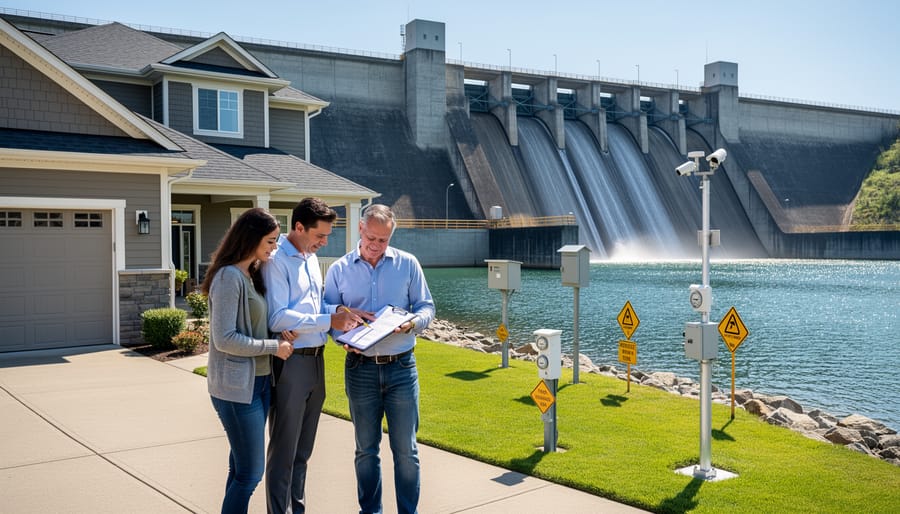
Sellers of properties located near Canadian hydropower facilities face distinct disclosure obligations that vary by provincial jurisdiction but share common environmental and safety considerations. Under federal guidelines aligned with hydroelectric power sustainability guidelines, property transactions must address several critical areas of information.
Flood zone classifications represent a primary disclosure requirement across all provinces. Properties within designated flood risk areas downstream or upstream of dam infrastructure require documented confirmation of their Federal Emergency Management Agency equivalent classification. British Columbia mandates disclosure through Form A schedules, while Ontario requires sellers to complete specific sections of the Seller Property Information Statement addressing water management concerns and flood plain designations.
Dam safety information disclosures have intensified following recent regulatory updates. Sellers must provide available documentation regarding the operational status, inspection records, and emergency action plans for upstream hydropower facilities within five kilometers of the property. Quebec’s Environment Quality Act requires explicit notification of proximity to Class I, II, or III dams, with mandatory reference to provincial dam safety databases.
Environmental impact disclosures extend beyond flood risks to encompass electromagnetic field measurements for properties near transmission corridors, water quality reports for those drawing from reservoir systems, and fish habitat alteration documentation. Alberta and Manitoba require sellers to disclose any historical compensation agreements or easement arrangements with hydropower operators. Provincial real estate boards increasingly recommend comprehensive environmental site assessments for properties within hydropower influence zones, particularly when selling as-is, to protect both parties from future liability claims related to undisclosed facility proximity impacts.
Liability Mitigation Through As-Is Clauses
Selling property as-is near Canadian hydropower infrastructure provides sellers with substantial liability protection against future claims stemming from environmental fluctuations or infrastructure modifications. The as-is clause explicitly transfers the property in its current condition, limiting seller responsibility for issues that may emerge post-transaction, particularly those related to proximity to hydropower operations such as water level variations, erosion patterns, or electromagnetic field exposure from transmission infrastructure.
This mechanism becomes especially valuable given the dynamic nature of hydropower operations, where seasonal water management, reservoir fluctuations, and operational adjustments can alter surrounding property conditions over time. By documenting the property’s condition at the time of sale and securing buyer acknowledgment through as-is agreements, sellers establish clear boundaries of accountability. This approach aligns with legal precedents in Canadian real estate law, where comprehensive disclosure paired with as-is clauses creates defensible positions against retrospective claims.
For energy sector professionals and property owners in hydropower corridors, incorporating detailed environmental assessments and infrastructure impact studies into disclosure documentation strengthens liability mitigation strategies. These measures demonstrate good faith while protecting against claims related to geotechnical shifts, vegetation changes, or access modifications resulting from evolving hydropower facility operations and regulatory requirements.
Cross-Border Perspectives: International Hydropower Development Impacts on Property Markets
Examining hydroelectric power worldwide reveals distinct patterns in how hydropower infrastructure influences residential property markets across different regulatory and geographic contexts. Norway’s experience provides particularly relevant insights for Canadian stakeholders, as both nations manage extensive hydropower portfolios within similar governance frameworks. Norwegian municipalities adjacent to major facilities like the Sima Power Station have documented property value stabilization through transparent community benefit agreements that include infrastructure investments and tax revenue sharing. These mechanisms have reduced market volatility compared to jurisdictions lacking formal compensation structures.
Switzerland’s approach offers contrasting lessons through its constitutional provisions requiring environmental impact mitigation. The Grande Dixence dam region demonstrates how mandated landscape preservation and recreational access can enhance property appeal, with residential values in affected communes maintaining parity with national trends over three-decade periods. This outcome differs from Brazil’s experience, where rapid hydropower expansion in the Amazon basin, particularly around the Belo Monte complex, triggered significant property devaluation in displacement zones. The Brazilian case underscores the importance of stakeholder consultation timelines, with compressed development schedules correlating to depressed real estate markets due to inadequate relocation planning.
China’s Three Gorges project represents the largest-scale residential displacement in hydropower history, with 1.3 million people relocated. Post-relocation studies indicate that property values in resettlement areas required 15-20 years to approach pre-displacement levels, primarily due to infrastructure development lags. This timeline has informed Canadian regulatory approaches emphasizing phased development and concurrent community investment.
Scandinavian nations collectively demonstrate that transparent environmental assessment processes reduce property market uncertainty. Finland’s Kemijoki River developments incorporated early-stage property owner engagement, resulting in minimal market disruption despite substantial infrastructure changes. For Canadian homeowners considering as-is sales near hydropower facilities, these international precedents highlight critical factors: the maturity of regulatory frameworks governing compensation, the existence of formalized community benefit structures, and the project lifecycle stage at transaction time. Markets near operational facilities with established benefit-sharing mechanisms typically exhibit greater stability than those adjacent to proposed or early-construction projects, informing strategic timing decisions for property transactions.
The intersection of hydropower development and as-is property sales in Canadian markets represents a microcosm of broader challenges facing renewable energy expansion worldwide. As demonstrated throughout this analysis, the presence of hydroelectric facilities creates distinctive pressures on neighboring residential properties through environmental modifications, regulatory constraints, and shifting community demographics. These factors necessitate as-is sales when traditional renovation pathways become economically or legally unfeasible due to proximity-related restrictions, environmental assessment requirements, or infrastructure-induced market uncertainties.
For industry professionals engaged in planning and project development, understanding these real estate dynamics proves essential for comprehensive stakeholder engagement and social license maintenance. Environmental scientists conducting impact assessments must recognize that property value fluctuations and forced as-is transactions constitute measurable socioeconomic effects warranting inclusion in comprehensive environmental reviews. Policy makers face the imperative of developing frameworks that balance renewable energy objectives with property rights protection, potentially including compensation mechanisms or streamlined regulatory processes for affected homeowners.
Looking forward, Canada’s commitment to expanding renewable energy capacity through initiatives like the recently announced federal clean electricity regulations will intensify these dynamics. International events such as the World Hydropower Congress consistently highlight that social acceptance remains critical to project viability across jurisdictions. Weekly newsletters from industry associations increasingly feature content addressing community relations strategies that acknowledge and mitigate property market impacts.
The professionals best positioned to navigate this evolving landscape will integrate real estate market literacy into their technical expertise, recognizing that successful hydropower development requires not only engineering excellence and environmental stewardship but also sophisticated understanding of the communities whose property values and residential stability depend upon thoughtful infrastructure planning.



More Stories
Environmental Impact and Responsible Online Casino Play: What Energy Professionals Need to Know
How AI is Revolutionizing Hydropower Project Financing
BC Hydro Dams